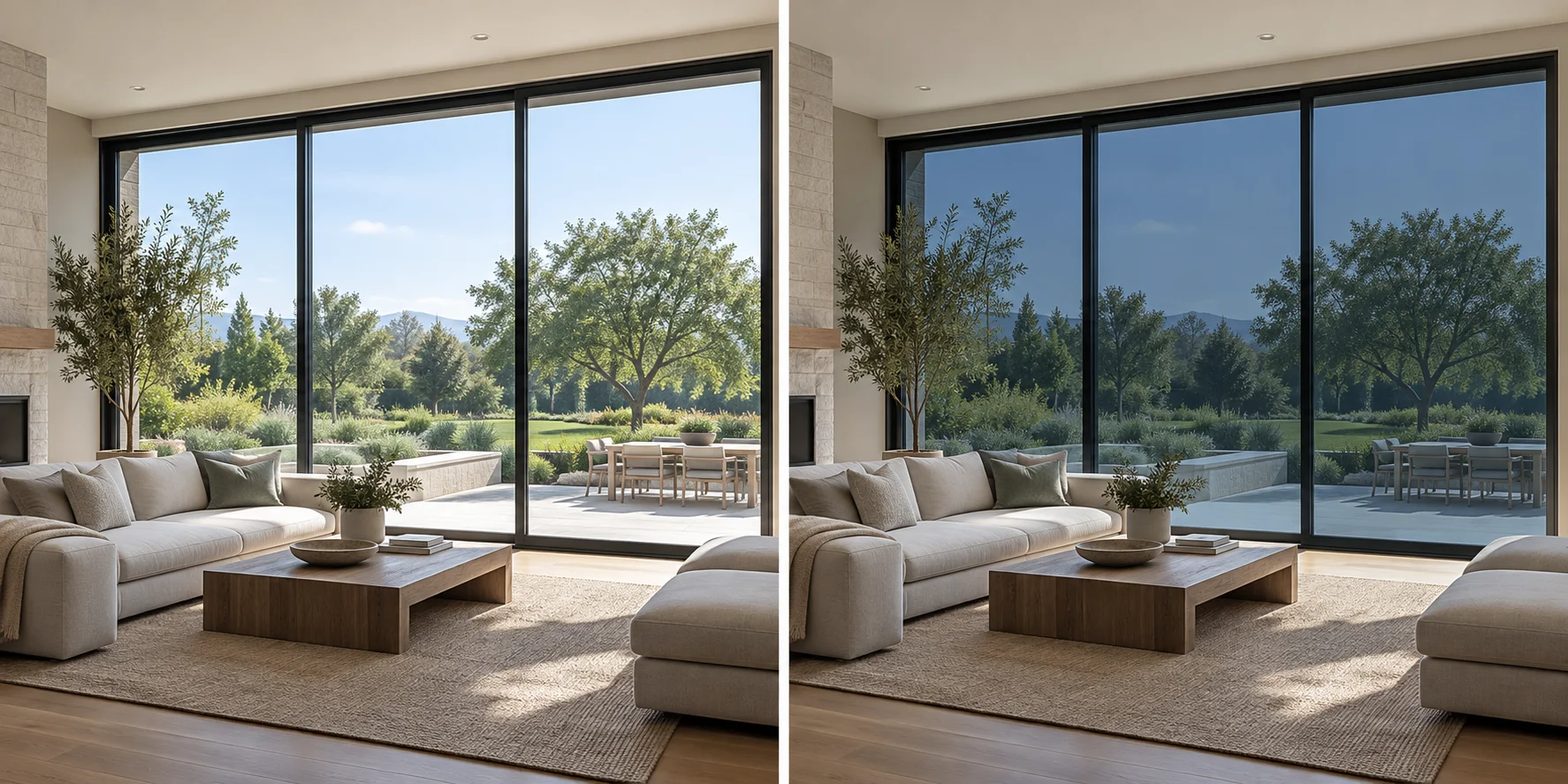
Large windows can create an uncomfortable tradeoff: enjoy the view or lower the shades to manage strong daylight. SPD smart glass offers adjustable tint for projects where glare and changing light are the main concerns. It has a different role from PDLC privacy film, making it a complementary option within a wider glazing plan.
Start with the problem: do you need to shade a view, screen a space for privacy, or address both in different areas? SPD belongs in the solar-shading discussion; it does not replace every privacy-glass application.
Where SPD can fit
SPD, short for suspended particle device, changes the amount of light passing through glazing when used with a compatible electrical system. Tint can be adjusted while retaining a view. Potential applications include sun-exposed windows, skylights, sunrooms, hospitality spaces and commercial perimeter areas.
Consider an office where afternoon glare affects screens, or a lounge where lowered blinds regularly cover the garden. Adjustable shading may help. Suitability depends on the selected product, glass construction, exposure, wiring and installation conditions.
A darker appearance alone does not establish thermal performance. Assessing solar control and possible cooling benefits requires the complete glazing specification and building conditions, including orientation, climate and controls. A tint illustration cannot establish energy savings or environmental performance.
Why PDLC remains relevant for privacy
SPD should not be relied on for complete privacy or blackout. Tinted glass can remain see-through, and indoor and outdoor lighting change throughout the day. Bedrooms, bathrooms and sensitive spaces may need additional screening.
PDLC smart film for existing glass serves a different priority: switching suitable glass between a clearer state and a light-diffusing privacy state. It can be considered for office partitions, consultation rooms and spaces where visual separation is the main requirement. The actual privacy conditions still need assessment.
For new glazing, switchable laminated privacy glass provides a route to specifying PDLC within a glass assembly. One building might use privacy glazing for meeting rooms and assess SPD for sun-exposed exterior windows. Each area needs its own specification.
Two SPD film formats to review
Self-adhesive SPD film is an option for compatible existing glass. A review establishes the selected film’s requirements, placement, edge finishing, exposure and electrical access. Do not assume an adhesive application will suit every existing window.
SPD film for lamination integrates into a fabricated glass assembly. This route requires coordination of glass construction, dimensions, fabrication, electrical connections and installation. Overhead and exterior glazing also need an assembly appropriate to loads, weather exposure and applicable safety requirements.
Confirm appearance and controls before ordering
Review a physical sample before approving the appearance. SPD can have a blue tone, particularly when darker; a lighter setting does not necessarily mean colorless glass. Check the sample against the view, interior finishes and lighting. Illustrations cannot replace that review.
The film needs matched power and control equipment. Confirm cable routes, control zones, service access and behavior when power is removed. Wall controls, remotes and building integration depend on the offered system. An ordinary lighting dimmer or PDLC transformer is not automatically compatible.
The written proposal should identify the product, glazing, electrical scope, installation responsibilities, warranty terms and delivery assumptions. Film-only pricing is not an installed-system quote.
Planning solar control for a specific space?
Start with your location, application and daylight problem. Approximate measurements are enough to begin a review.
Explore an SPD project quoteTechnology references: Research Frontiers: architectural SPD and Gauzy: SPD and privacy limitations. References do not imply a supplier agreement or define the specifications of a SmartGlass USA proposal.