01
Dental offices
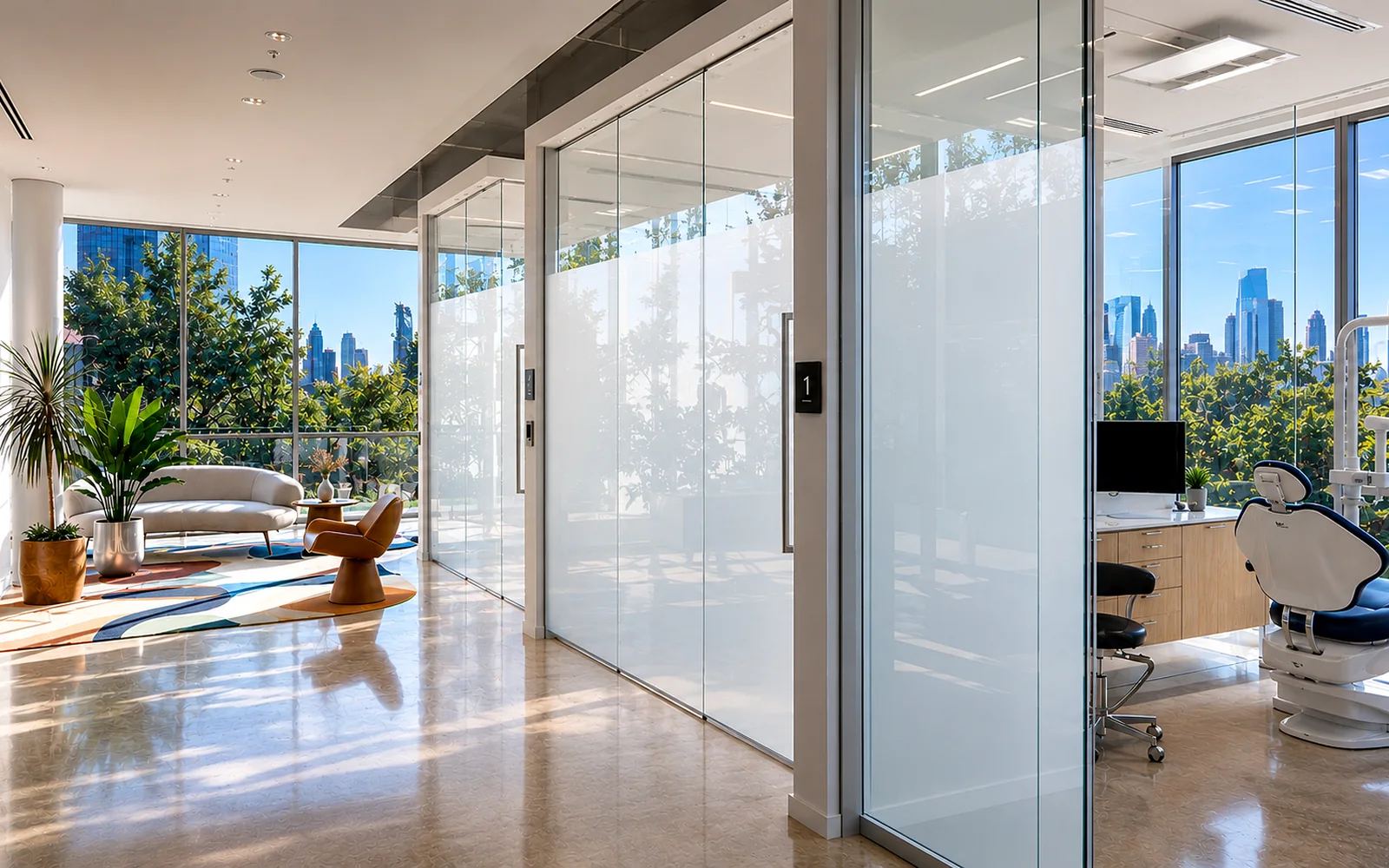
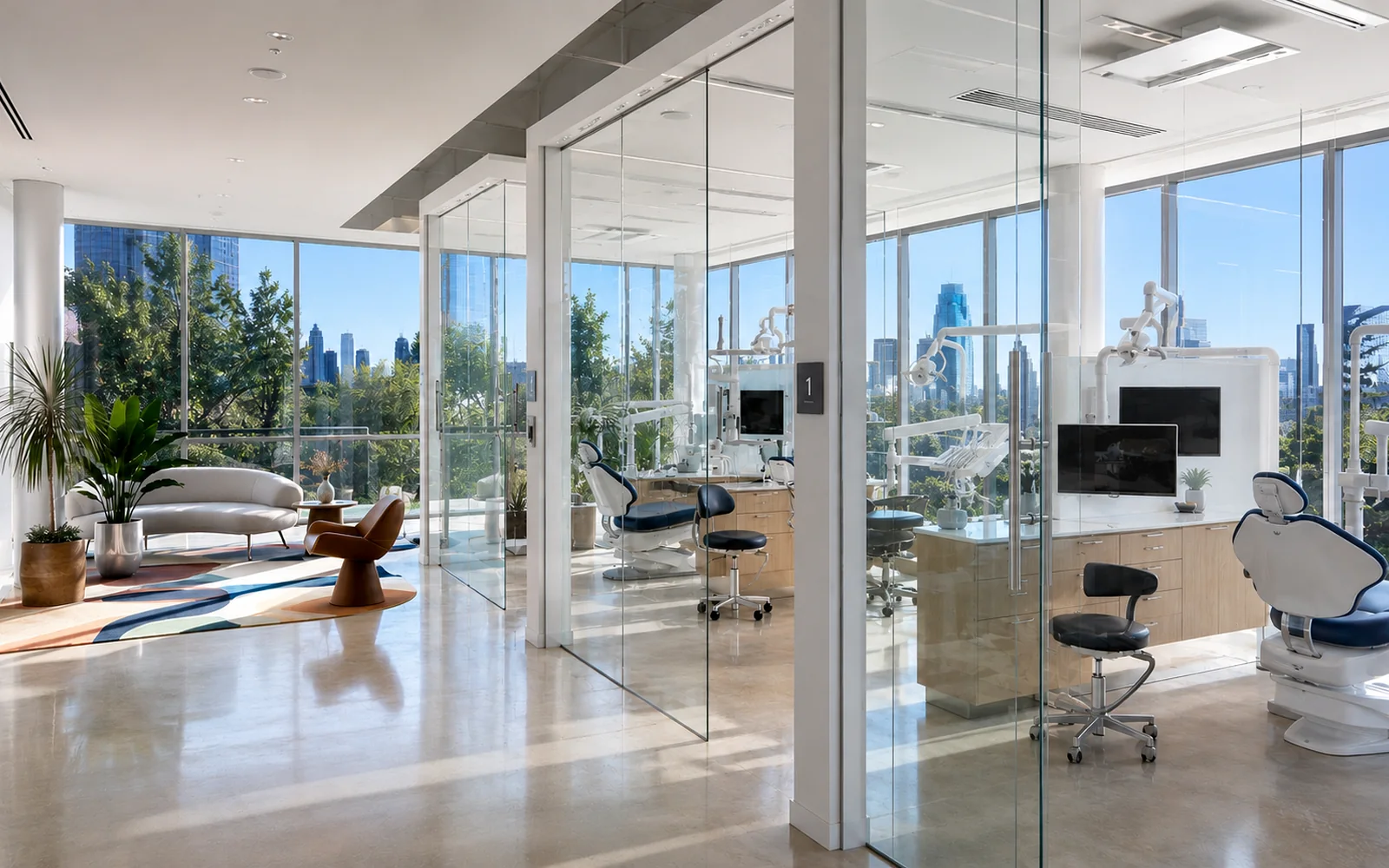
Use switchable privacy for dental treatment rooms, consultation spaces and glass partitions where patient discretion matters.
Healthcare privacy glass
Maintain observation when care requires it and create visual discretion when the patient needs it in consultation rooms, patient areas, dental offices and clinical interiors.
 Privacy
Clear
Privacy
Clear
Application visualization: compare clear visibility with privacy mode. Actual appearance varies by glass, lighting and viewing distance.
Why healthcare spaces use smart glass
Healthcare environments need openness, visibility and light. They also need visual privacy for patients, consultations, treatment areas and clinical conversations.
Smart glass allows healthcare teams to shift between transparent visibility and privacy mode without relying only on curtains, blinds or static frosted glass. The result is a cleaner, more modern privacy layer for selected medical interiors.
Every application still requires review. Glass type, exposure, wiring, controls, cleaning conditions and installation access determine whether PDLC smart film or switchable laminated smart glass is the correct path.
Best healthcare use cases
Smart glass is strongest when a clinical space needs a controlled shift between open visibility and visual discretion.
Use switchable privacy for dental treatment rooms, consultation spaces and glass partitions where patient discretion matters.
Create privacy for discussions, exams and specialist consultations without permanently closing the room visually.
Review smart glass for patient-facing areas that need clear visibility at some times and privacy during care moments.
Support visual discretion in treatment zones, therapy rooms and recovery-adjacent glass interiors.
Balance operational openness with privacy for selected conversations, screens or staff-facing clinical moments.
Use clear glass for visibility when needed and privacy mode when discretion or controlled viewing is preferred.
Upgrade patient-facing interiors in dermatology, aesthetics, wellness, therapy and specialty care environments.
Improve privacy for administrative offices, conference rooms and medical office partitions with a cleaner architectural finish.
Clinical interiors
A real curved clinical-interior application shows why geometry, privacy effect, cleaning requirements and controls must be reviewed together before a product path is promised.
Patient privacy and clinical discretion
Patient-facing environments often need privacy during examinations, consultations, treatment, recovery and family conversations.
Switchable privacy glass can support visual discretion while keeping the space modern and easy to understand. It is a practical option for selected areas where the design goal is cleaner than curtains or blinds, but more flexible than permanent frosted glass.
Technical suitability must be reviewed before pricing. The correct product path depends on glass condition, frame details, wiring access, controls and exposure to moisture or cleaning procedures.
 Privacy
Clear
Privacy
Clear
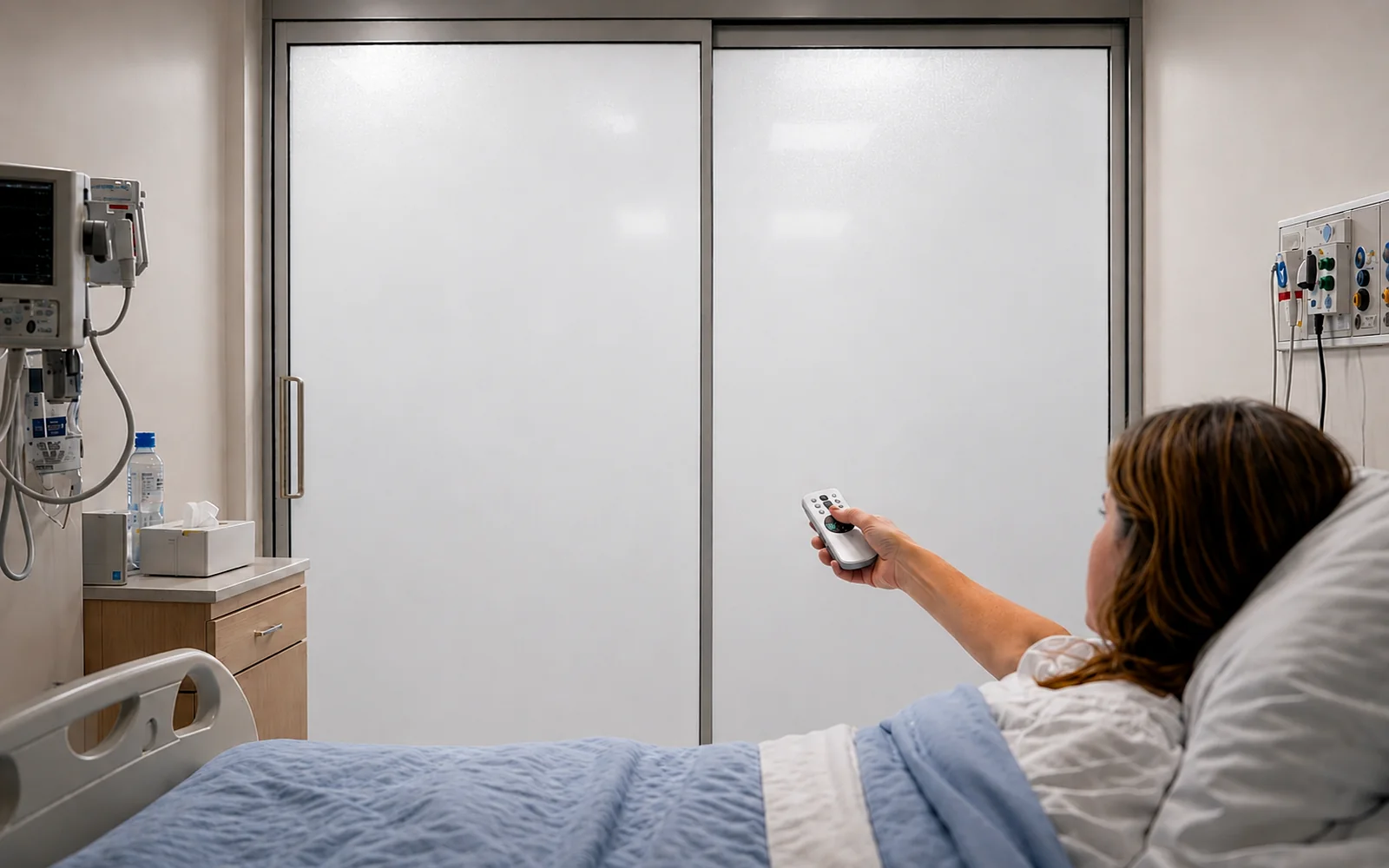
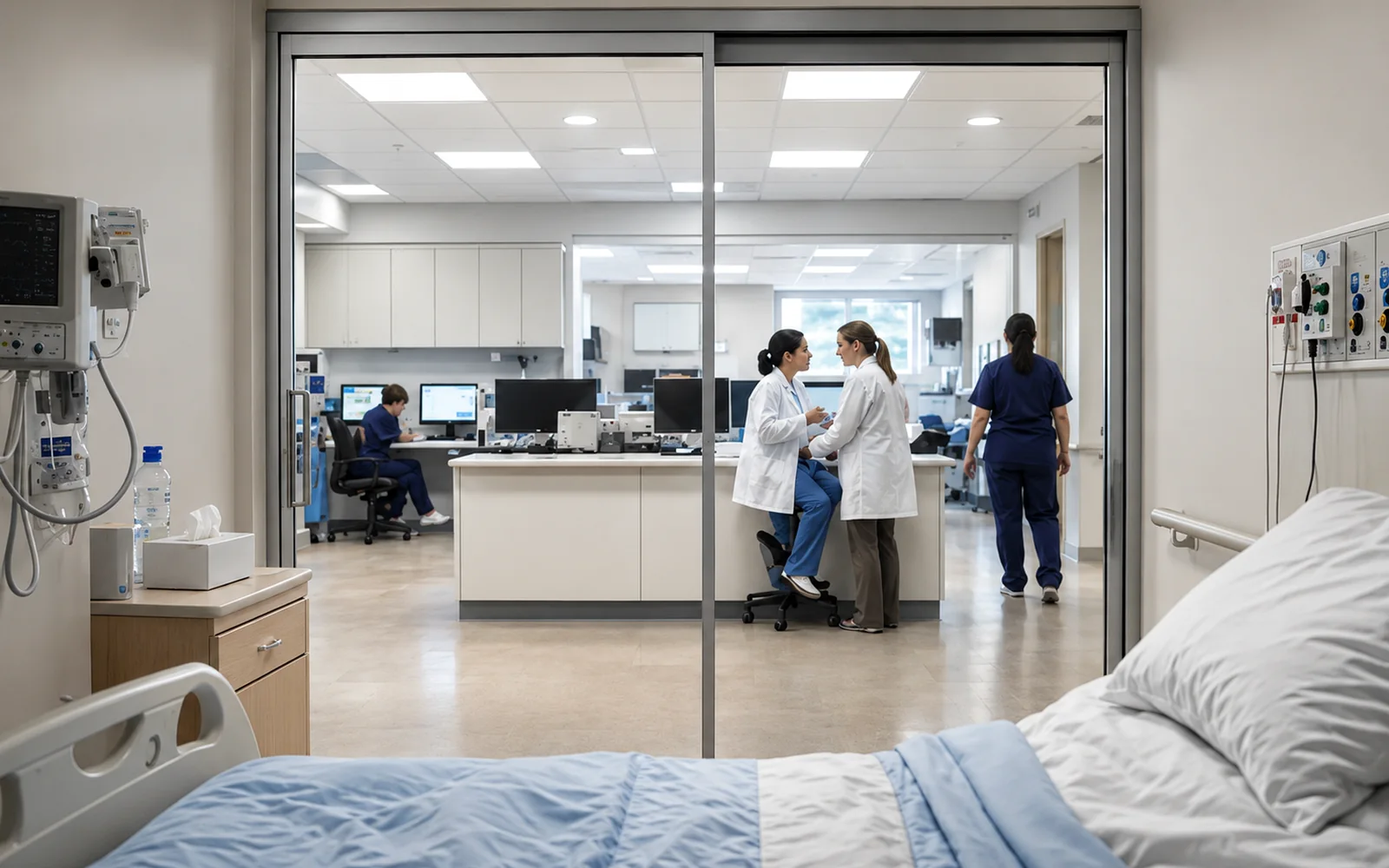
Patient room and treatment privacy should be reviewed by application, glass condition and control requirements.
 Privacy
Clear
Privacy
Clear
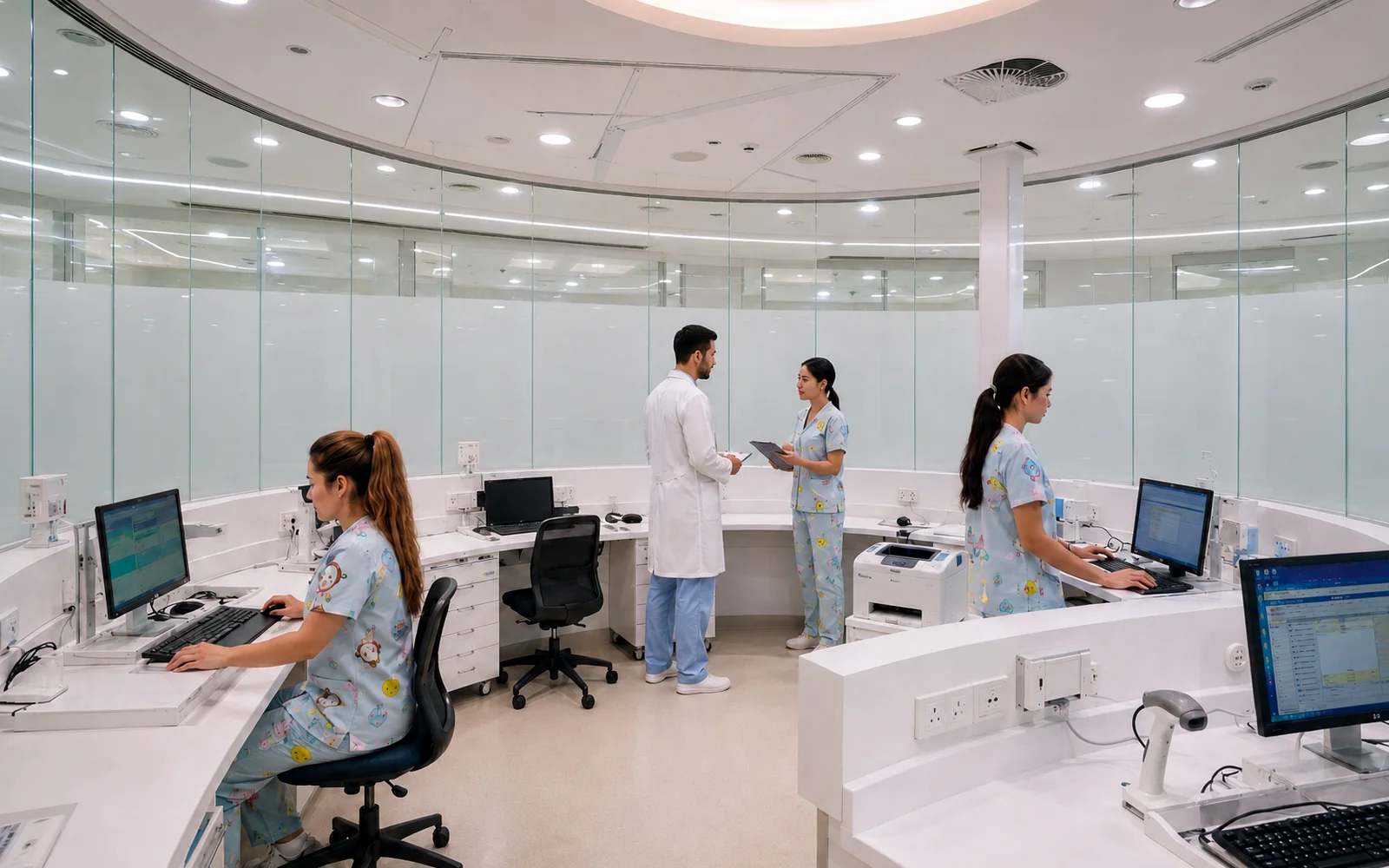
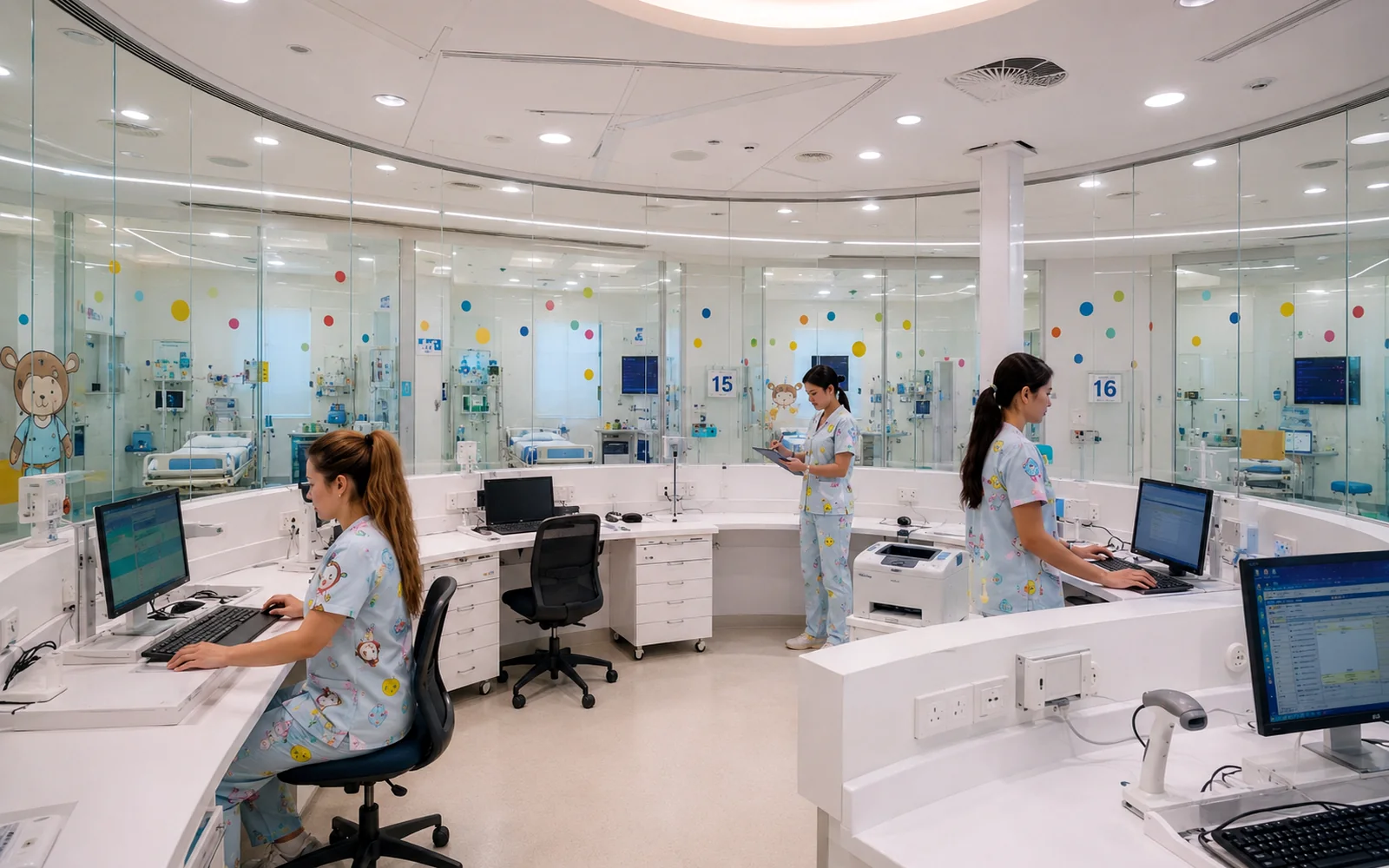
Switchable privacy can help manage visibility and discretion in selected nurse station and observation-area designs.
Nurse stations and observation areas
Healthcare spaces often need partial openness for visibility and operational flow, but privacy during specific clinical moments.
Switchable privacy glass can help manage that balance in nurse stations, observation areas and specialty treatment zones. In clear mode, the area can remain visually connected. In privacy mode, the same glass can reduce direct visibility when discretion is needed.
This is not a replacement for clinical protocols or privacy regulations. It is an architectural privacy tool that should be planned with the project team, installer and electrical route in mind.
Product fit
SmartGlass USA reviews the site conditions before recommending a product path. Existing interior glass and new fabricated glass are not the same specification problem.
Best when suitable existing interior healthcare glass can be upgraded with a lower-disruption retrofit path.
Best for new glass, fabricated panels and demanding clinical interiors where the PDLC layer should be protected inside the glass assembly.
Technical review
Smart glass is not automatically suitable for every glass panel or every healthcare condition. SmartGlass USA reviews the application, installation access and control requirements before confirming the right path.
The goal is to identify whether PDLC smart film, switchable laminated glass or another privacy approach makes sense for the project conditions.
Benefits for healthcare projects
Shift glass from clear to privacy mode when a consultation, exam or treatment moment needs discretion.
Reduce visual dependence on curtains or blinds in selected interior glass applications.
Help patients understand when an area is visually private while maintaining a modern clinical environment.
Keep glass architecture useful instead of permanently obscuring rooms with static privacy materials.
Support a sharper, more advanced interior experience for clinics, dental offices and specialty healthcare spaces.
Useful for architects, contractors, glass dealers and installers planning privacy upgrades for healthcare clients.
Who this page is for
SmartGlass USA supports healthcare privacy glass conversations from early concept through technical review, product path and installation coordination. Clinics, consultation rooms and patient-facing interiors show where controlled visual privacy can be relevant in real healthcare workflows.
Project review
Send the project type, approximate dimensions, glass condition and timeline. SmartGlass USA will review the application before recommending PDLC smart film or switchable laminated smart glass.
FAQ
Smart glass for healthcare is switchable privacy glass or PDLC smart film used in clinical interiors to shift glass from clear visibility to a private frosted appearance on demand.
Yes. Smart glass may be reviewed for suitable clinic and dental office applications such as consultation rooms, treatment areas, glass partitions and patient-facing privacy zones.
PDLC smart film can be considered for suitable existing interior glass when the glass condition, exposure, edge protection and wiring route are appropriate.
Smart glass may be suitable for selected patient room or treatment privacy applications after technical review of the glass, frame, exposure, controls, wiring and cleaning conditions.
Yes. Switchable smart glass and PDLC smart film require low-voltage power from a transformer, with wiring and controls planned during project review.
PDLC smart film is often reviewed for suitable existing interior glass. Switchable laminated smart glass is usually preferred for new glass, fabricated panels, demanding environments and long-term protected assemblies.
Pricing requires project review. SmartGlass USA needs the application type, dimensions, existing or new glass path, wiring route, controls, timeline and installation conditions before quoting.
Healthcare privacy must account for geometry, lighting, access and the fact that PDLC privacy is translucent rather than blackout.