
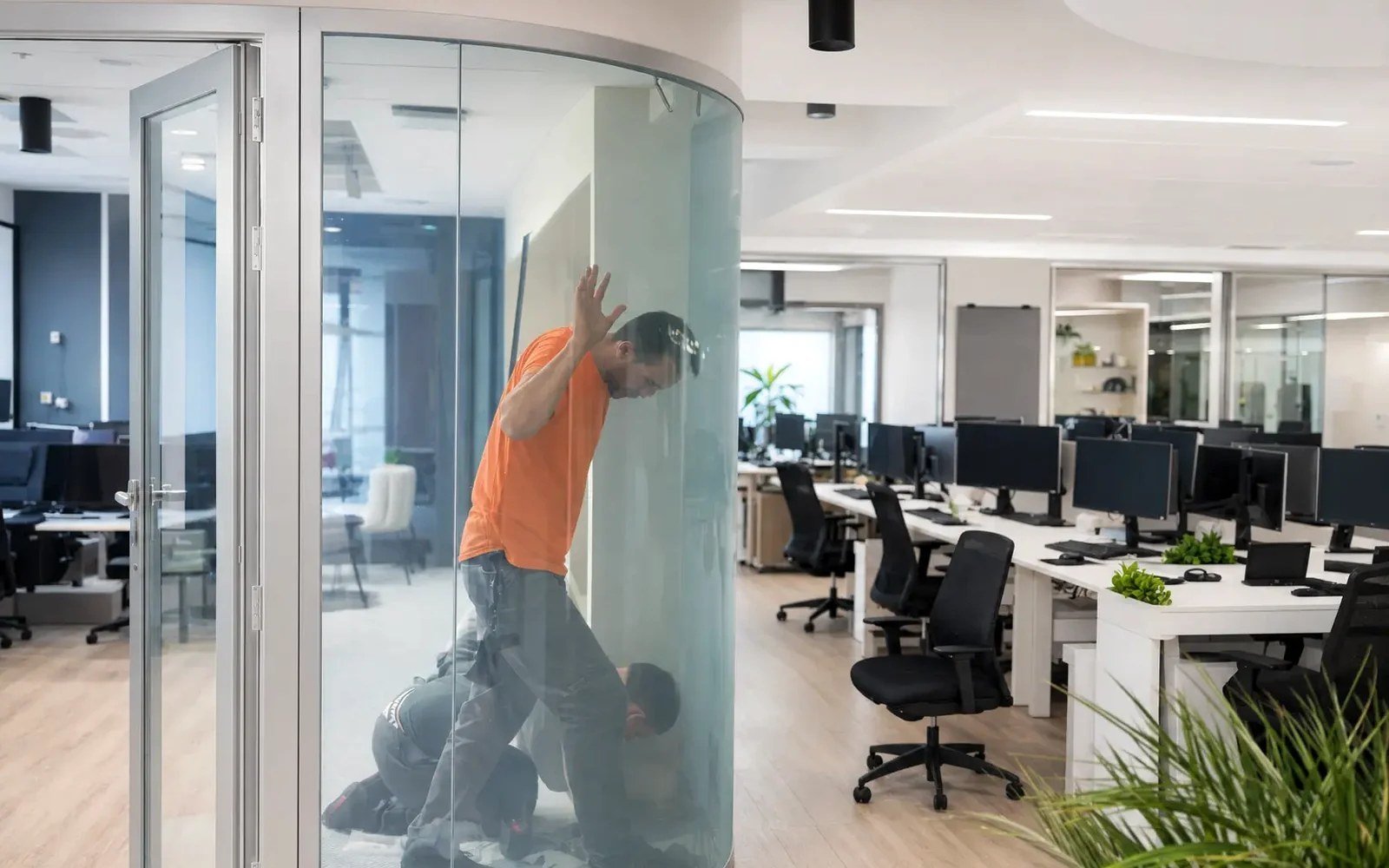
A panel can arrive optically clean, electrically sound, and correctly fabricated, then become a replacement order because it was staged against a hard edge, lifted by a lead exit, or installed before the control path was ready. This smart glass handling guide is for project teams that need to protect both the glazing assembly and the execution schedule. Switchable glass is not difficult to work with, but it does require reference discipline from receiving through commissioning.
The first decision is also the most consequential: are you handling retrofit PDLC film applied to existing interior glass, or fabricated laminated smart glass supplied as a new glazing assembly? The handling rules overlap, but the installation risks are different. Treating them as interchangeable is a common source of misquotes, field damage, and avoidable callbacks.
Smart Glass Handling Guide: Start With the Product Path
Retrofit adhesive PDLC film is intended for suitable existing interior glass. The substrate must be evaluated for flatness, cleanliness, edge condition, access, and visual quality before work begins. Film arrives as a finished electrical privacy layer that must be protected from contamination, creasing, excessive edge stress, and damage to its busbar or lead connections. It is not a substitute for a fabricated safety-glass assembly where code, wet exposure, exterior conditions, or a new glass package governs the project.
Fabricated laminated smart glass is a glazing product. Its switchable interlayer is enclosed within the assembly, but the panel still requires the same disciplined transport, staging, setting, and edge protection expected of premium architectural glass. Its electrical leads and connection points create additional coordination requirements. A laminated smart-glass panel should be specified early enough that dimensions, make-up, safety requirements, edge treatment, hardware interfaces, and wiring routes are resolved before fabrication release.
For shower glass, exterior-facing openings, high-humidity applications, and demanding architectural conditions, fabricated laminated smart glass is generally the serious execution path. Retrofit film may be appropriate for an existing office sidelight, conference-room partition, or interior glazed wall where the glass itself is already correct and conditions support an interior retrofit. The right answer depends on the assembly, not simply on the desired privacy effect.
Receiving and Staging Without Creating Damage
Receiving is the point where a project team can prevent a large percentage of disputes. Inspect crates, racks, and packaging before signing off. Look for impact marks, broken restraints, moisture intrusion, or evidence that panels shifted in transit. Record visible concerns immediately and photograph both the packaging and affected area before materials are moved.
Move fabricated panels on appropriate A-frames or glass racks with protected contact points. Keep glass upright at the angle recommended for the rack, secured against movement, and isolated from metal, concrete, fasteners, and abrasive surfaces. Do not lean panels directly against a wall or stack materials where their corners can be contacted by carts, lifts, or other trades.
Electrical leads deserve their own protection plan. They should never carry panel weight, serve as a handhold, or remain loose where they can be pinched by a rack, frame, gasket, or temporary protection. Identify the lead exit location during the pre-install review and confirm that the frame or wall detail provides a controlled route to the power connection. A lead that is too short, trapped behind glazing, or routed through an unserviceable cavity can turn a clean installation into a field modification exercise.
For retrofit film, maintain a clean, dry, controlled work area. Dust, drywall debris, silicone residue, fingerprints, and airborne contamination are not cosmetic details. They can affect adhesion and visible finish. Film should remain in its protective packaging until the glass is prepared and the installer is ready to proceed.
Coordinate the Electrical Scope Before Glass Is Set
Switchable glass changes state when power is applied. That simple function depends on a complete electrical path: correctly selected power supplies, properly sized and routed low-voltage wiring, accessible connections, and an approved control method. The glazing team, electrician, millworker, drywall contractor, and controls provider may all touch this scope. If responsibilities are not defined, the leads are often the last thing considered.
Before installation, confirm where power supplies will be located, how they will be ventilated and accessed, and who is furnishing each component. Establish whether the system will operate from a wall switch, remote control, automation interface, occupancy logic, or a dedicated privacy control. The glass should not be energized from an improvised source during installation simply to check its appearance.
A mock-up or first-install verification is especially valuable where multiple panels are grouped, custom framing conceals the electrical path, or control integration is involved. Test one complete circuit before closing walls, applying final trim, or releasing repetitive installation. This allows the team to verify opacity behavior, switching consistency, lead orientation, power capacity, and service access while changes remain manageable.
Setting Fabricated Smart Glass in the Opening
Use trained glazing personnel and conventional safe glass-handling practices appropriate to the panel size, weight, and installation condition. Suction equipment, setting blocks, gaskets, sealants, and bite requirements must suit the approved glazing system. Smart glass does not eliminate the need for proper glass engineering or manufacturer-compatible materials.
Avoid point loading at corners and edges. Do not force a panel into an opening that is out of square, undersized, or obstructed. If the panel does not set correctly, stop and inspect the opening, hardware, and frame tolerances rather than using excessive force. An electrical interlayer does not change the fundamental fact that glass edges are vulnerable.
Pay particular attention to locations where leads exit the panel. The lead route must remain free of sharp bends, compression, and contact with uncured sealant or moving hardware. In framed partition systems, confirm that the lead does not interfere with pressure plates, clips, stops, or cover caps. In frameless or minimal-frame applications, the electrical detail should be resolved during design, not improvised after the panel is hanging.
Do not tape directly over exposed electrical connection points unless the approved installation method calls for it. Do not drill, notch, grind, or cut fabricated smart glass in the field. Dimensions, holes, cutouts, and hardware preparation belong in the fabrication package. Field alteration can compromise the panel and typically creates a clear responsibility problem for the project team.
Applying Retrofit PDLC Film With Visual Discipline
Retrofit film work is finish work. Successful installation starts with a substrate review, not with the film roll. Existing glass should be free from chips, deep scratches, failed coatings, silicone contamination, and conditions that will remain visible through or around the applied film. The project team should align expectations about edge margins, busbar locations, wiring concealment, and the visual standard before installation day.
The installer must use approved preparation and application procedures for the specific film system. Overhandling the material, folding it, dragging it across a work surface, or allowing debris onto the adhesive side can create visible defects that no control system will correct. Where several panels meet along a partition wall, establish consistent orientation and alignment so the finished privacy surface reads as intentional across the elevation.
Electrical connection work should follow the film system's approved method, including insulation and strain relief. A neat connection that cannot be accessed for service is not a finished detail. Coordinate covers, channels, trim, or adjacent construction so the electrical transition is protected without being permanently buried.
Cleaning, Testing, and Turnover
Clean only with methods approved for the finished glass and adjacent framing. Abrasive pads, blades used carelessly near edges, aggressive solvents, and saturated cleaning around unprotected electrical details can create damage after an otherwise successful install. The operating state should be checked before final cleaning and again after the area is released by other trades.
Commissioning should verify more than whether a panel turns from clear to private. Confirm that every zone responds to its intended control, panels switch uniformly, power supplies remain accessible, and labels or as-built documentation identify the circuits. For grouped rooms, test the control logic from the user's actual position, whether that is a conference-room entry, clinical intake station, guest bath, or executive office.
At turnover, provide the owner or facilities team with basic operating guidance and a clear contact path for service questions. They should understand that switchable glass is a powered architectural system, not ordinary static glazing. Cleaning practices, control behavior, and access to electrical components all affect long-term performance.
The Field Questions That Deserve an Early Answer
A disciplined pre-install review should settle several issues before materials arrive: Is the project using existing glass or new fabricated glass? Does the location require a safety-rated laminated assembly? Where do the leads exit, and who owns the route to power? Which trade provides the power supply and final controls? Can the connections be serviced after completion? What is the approved visual standard for film edges, panel alignment, and cable concealment?
These are not administrative details. They determine whether the privacy system can be installed cleanly, commissioned on schedule, and supported after occupancy. On qualified commercial projects, the best handling plan is usually the one developed while the wall, electrical scope, and glazing package can still be coordinated together.
The practical standard is straightforward: protect the glass, protect the electrical path, and stop before field conditions force an improvised fix. That discipline gives installers, glaziers, designers, and owners a better-looking result and a far more reliable privacy surface.